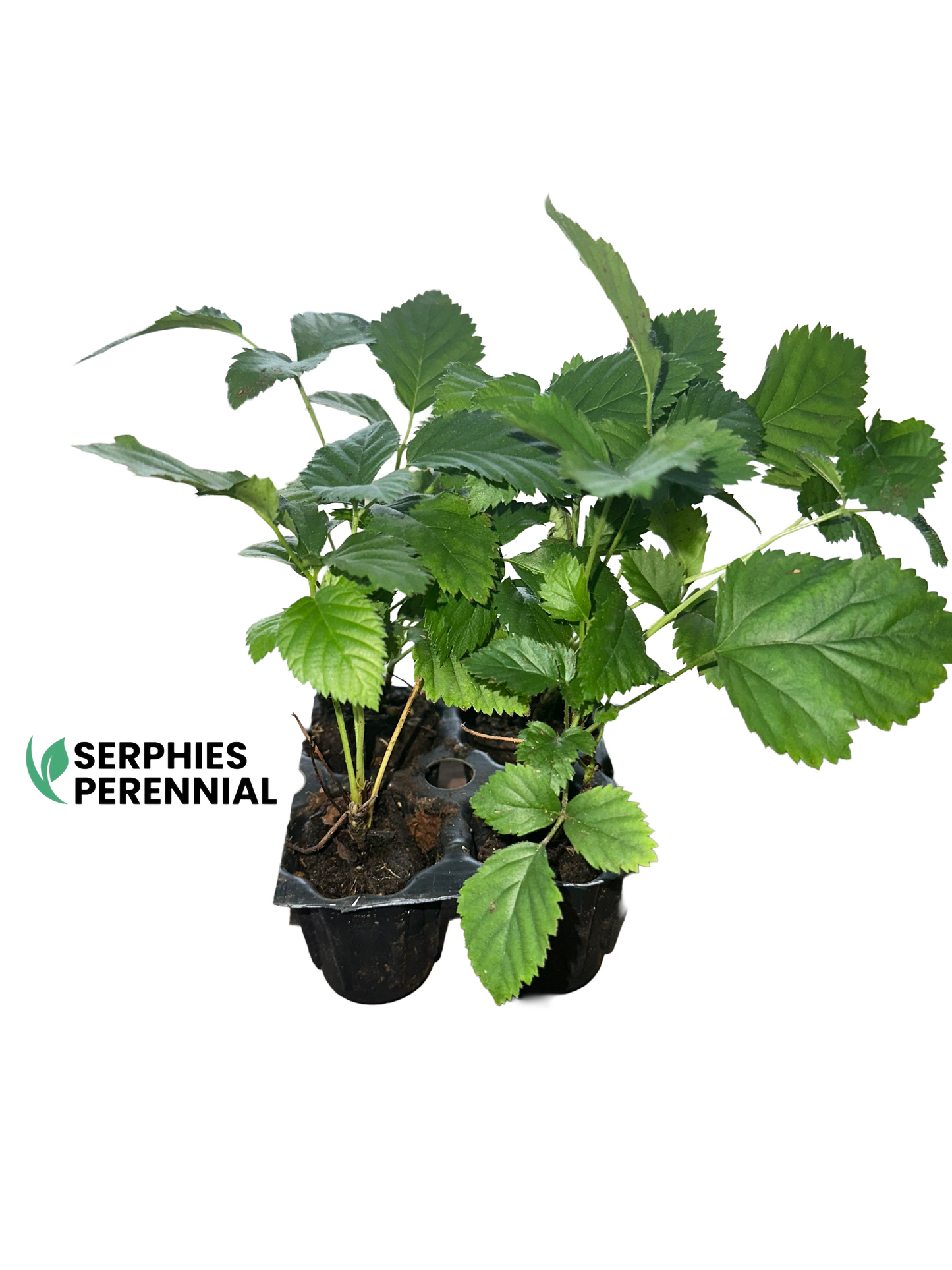
Thornless Boysenberry Plants – 4 Live Tissue Culture Starter Plants
Thornless Boysenberry Plants – 4 Live Tissue Culture Starter Plants
Couldn't load pickup availability
- Includes four (4) healthy tissue culture boysenberry plants
- Ships fast in a sturdy box — arrives alive guaranteed
- Thornless variety, perfect for home gardens and containers
- Grows in USDA Hardiness Zones 5–9
- Questions? We're here to help — reach out anytime
Why Grow Boysenberries?
The boysenberry is a cross between a blackberry, a raspberry, and a loganberry, and it tastes like the best parts of all three — deep wine-purple, larger than a blackberry, with a sweet-tart flavor and a soft, almost melting texture. If you have never eaten one, there is a reason: boysenberries are too delicate to survive commercial shipping, so grocery stores almost never carry them fresh. Growing your own is essentially the only way to eat a ripe boysenberry.
They are also generous producers. A single established plant can yield several pounds of fruit a season, and the berries are excellent fresh, in pies and cobblers, and as jam or syrup.
What You Receive
You will receive four (4) tissue culture boysenberry starter plants. Tissue culture means each plant was propagated in a sterile lab environment from a single healthy parent plant, so every plant you receive is disease-free and genetically identical to that parent. You are not gambling on seed variation or importing pests along with a bare-root cutting.
These arrive as young, actively growing starter plants — not dormant bare-root sticks. They are small when they arrive, and that is normal and intentional. Small plants transplant with far less shock and establish faster than larger nursery stock. Pot them up on arrival and they will take off quickly.
Growing Boysenberries: Zones, Sun, and Soil
Boysenberries thrive in USDA Hardiness Zones 5 through 9. Give them full sun — at least six hours of direct light per day — for the heaviest fruit set. They will tolerate partial shade but you will harvest less.
Plant in well-draining soil with a pH between 5.5 and 7.0. Boysenberries hate wet feet; if your soil holds water, plant in a raised bed or a large container. Space plants about four feet apart, with rows six to eight feet apart. Because boysenberry canes are trailing rather than upright, they need a trellis or fence to climb — a simple two-wire trellis at three and five feet works well.
Expect your first meaningful harvest in the second season, with full production by year three.
Care and Pruning
Water deeply once or twice a week during the growing season, more in summer heat or in containers. Mulch to hold moisture and keep the roots cool. Feed with a balanced fertilizer in early spring as new growth begins.
Boysenberries fruit on second-year canes. After a cane has fruited, cut it to the ground — it will not produce again. Train the current season's new canes onto the trellis for next year's crop. That single habit is most of what separates a productive boysenberry patch from a tangled one.
Frequently Asked Questions
When will my plants fruit?
Usually a light crop the second summer and full production by the third year. Boysenberries fruit on second-year canes, so the first year is about growing canes, not berries.
Do I need more than one plant to get fruit?
No. Boysenberries are self-fertile, so a single plant will set fruit on its own. Planting several simply gives you more berries.
Can I grow these in containers?
Yes. Use at least a 10 to 15 gallon container with good drainage and give the canes something to climb. Container plants dry out faster, so check the soil more often.
Will they survive my winter?
Down to Zone 5, yes, though a heavy mulch over the roots helps in the coldest zones. In Zones 8 and 9 the challenge is heat rather than cold — afternoon shade in the hottest part of summer is welcome.
How do you ship live plants?
Packed in a sturdy box designed to keep the plants upright and protected, and shipped fast so they spend as little time in transit as possible. Arrives alive guaranteed.
Share