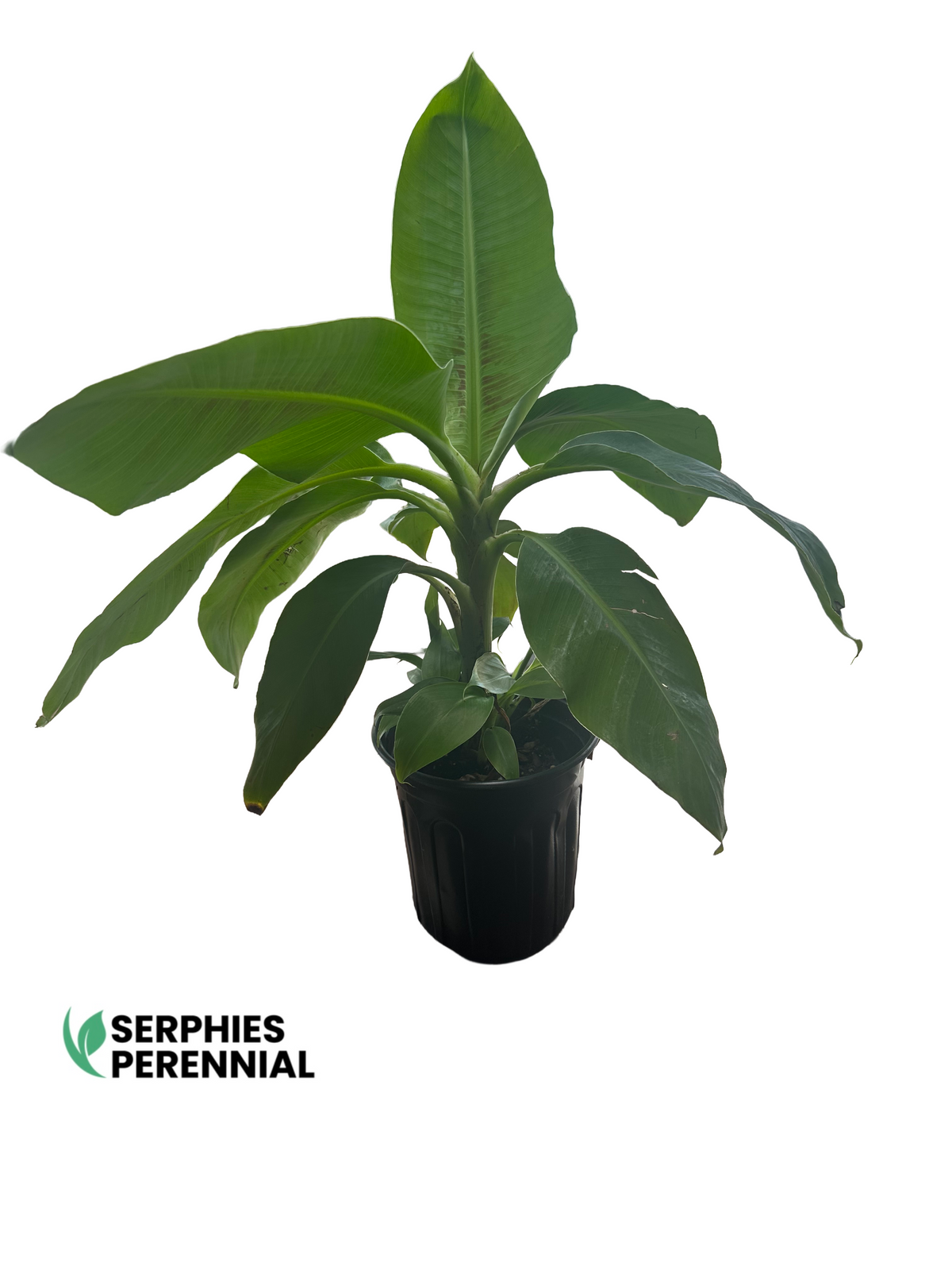
Gran Nain Banana Plants – 4 Live Tissue Culture Starter Plants
Gran Nain Banana Plants – 4 Live Tissue Culture Starter Plants
Couldn't load pickup availability
- Includes four (4) healthy tissue culture Gran Nain banana plants
- Ships fast in a sturdy box — arrives alive guaranteed
- The commercial-standard banana, grown at backyard scale
- Grows in USDA Hardiness Zones 8–11
- Fast growing and heavy producing — fruit in as little as 15 months
- Questions? We're here to help — reach out anytime
Why Grow Gran Nain Bananas?
Gran Nain is the banana the commercial industry chose. It is the variety behind a large share of the bananas exported worldwide, selected over decades for one reason above all others: it produces enormous bunches of excellent fruit, reliably. Growing Gran Nain at home means growing the same cultivar the professionals grow, without the two weeks of refrigerated shipping between the plant and your kitchen.
The fruit is sweet, creamy, and full-flavored, and a mature plant can produce a bunch weighing sixty pounds or more under good conditions. Gran Nain reaches roughly eight to twelve feet — taller than a Dwarf Cavendish but still well short of a standard banana — and its shorter, sturdier stalk stands up to wind noticeably better than taller varieties, which matters in Florida.
Why a Four-Pack?
Bananas are happiest and most productive planted as a group. A cluster of plants shelters each other from wind, holds humidity around the leaves, and gives you staggered harvests instead of one enormous bunch all at once. Four plants is enough to establish a real backyard banana patch rather than a single specimen.
It also builds in insurance. A banana stalk fruits once and then dies back, with a pup taking its place. Starting with four plants means you always have something coming into production while another is finishing up.
What You Receive
Four (4) tissue culture Gran Nain banana starter plants. Tissue culture propagation grows each plant in a sterile laboratory environment from a single healthy parent, so every plant arrives disease-free and genetically identical to that parent. This matters more for bananas than for almost any other crop — Panama disease and other soil-borne pathogens spread readily through conventional pup division, and clean tissue culture stock is the standard commercial growers rely on for exactly that reason.
These arrive as young, actively growing starter plants. They are small on arrival by design; small bananas transplant with very little shock and grow astonishingly fast once established.
Growing Gran Nain: Zones, Sun, and Soil
Hardy in USDA Zones 8 through 11. In Zone 8 expect dieback to the ground in a hard freeze with regrowth from the root in spring. In Zones 9 through 11 plants generally stay evergreen and fruit dependably.
Plant in full sun, eight hours where you can manage it. Bananas want rich, deep, well-draining soil loaded with organic matter, and they are among the hungriest and thirstiest plants you can grow. Amend generously with compost at planting.
Space plants six to eight feet apart for an in-ground patch. For containers, use at least a 20 gallon pot per plant — Gran Nain gets larger than a Dwarf Cavendish and will outgrow a small container quickly.
Care and Feeding
Water deeply and often. A fruiting banana in Florida summer can use several gallons a week. Mulch heavily to hold that moisture and keep roots cool.
Feed monthly through the growing season with a high-potassium fertilizer. Potassium drives fruit production in bananas more than any other nutrient, and under-fed plants simply will not fruit no matter how large they get.
Thin each clump to one main stalk and one or two pups. Crowded clumps put their energy into leaves instead of fruit. After a stalk fruits, cut it down at the base and let the strongest pup take over.
Frequently Asked Questions
How long until I get bananas?
Typically 15 to 24 months from planting with full sun, consistent water, and monthly feeding. Gran Nain is one of the faster varieties to fruit.
How is Gran Nain different from Dwarf Cavendish?
Gran Nain grows taller — roughly eight to twelve feet versus six to ten — and produces noticeably larger bunches. Dwarf Cavendish is the better choice for a small patio or a container; Gran Nain is the better choice if you have yard space and want serious yield. Compare our Dwarf Cavendish four-pack here.
Do I need more than one plant?
Bananas do not require cross-pollination, so a single plant will fruit. But they perform measurably better in groups, which is why we sell them in fours.
Will it survive a freeze?
In Zone 8, expect the top growth to die back and regrow from the root in spring. Heavy mulch over the base substantially improves survival.
How do you ship live plants?
Packed in a sturdy box that keeps plants upright and protected, shipped fast to minimize transit time. Arrives alive guaranteed.
Share